
Austin’s extreme weather – blazing heat, high humidity, and sudden temperature swings – can wreak havoc on garage floors. Choosing the right coating is key to avoiding issues like cracking, yellowing, or peeling. Here’s what you need to know:
- Epoxy Coatings: Durable and cost-effective, but prone to UV damage and slower curing times. Costs range from $4 to $12 per sq. ft. and last 15–20 years with proper care.
- Polyaspartic Coatings: UV-resistant, flexible, and quick to cure (ready in 24 hours). Prices start at $4 per sq. ft., lasting 15–20+ years.
- Epoxy-Polyaspartic Hybrids: Combine epoxy’s strong adhesion with polyaspartic’s UV resistance and flexibility. Best for Austin’s tough climate, costing $4,000–$5,500 for a two-car garage.
Quick Tip: For garages exposed to direct sunlight, opt for polyaspartic or hybrid systems. Epoxy is better suited for low-sunlight, low-traffic spaces. Always hire professionals for proper installation and long-term durability.
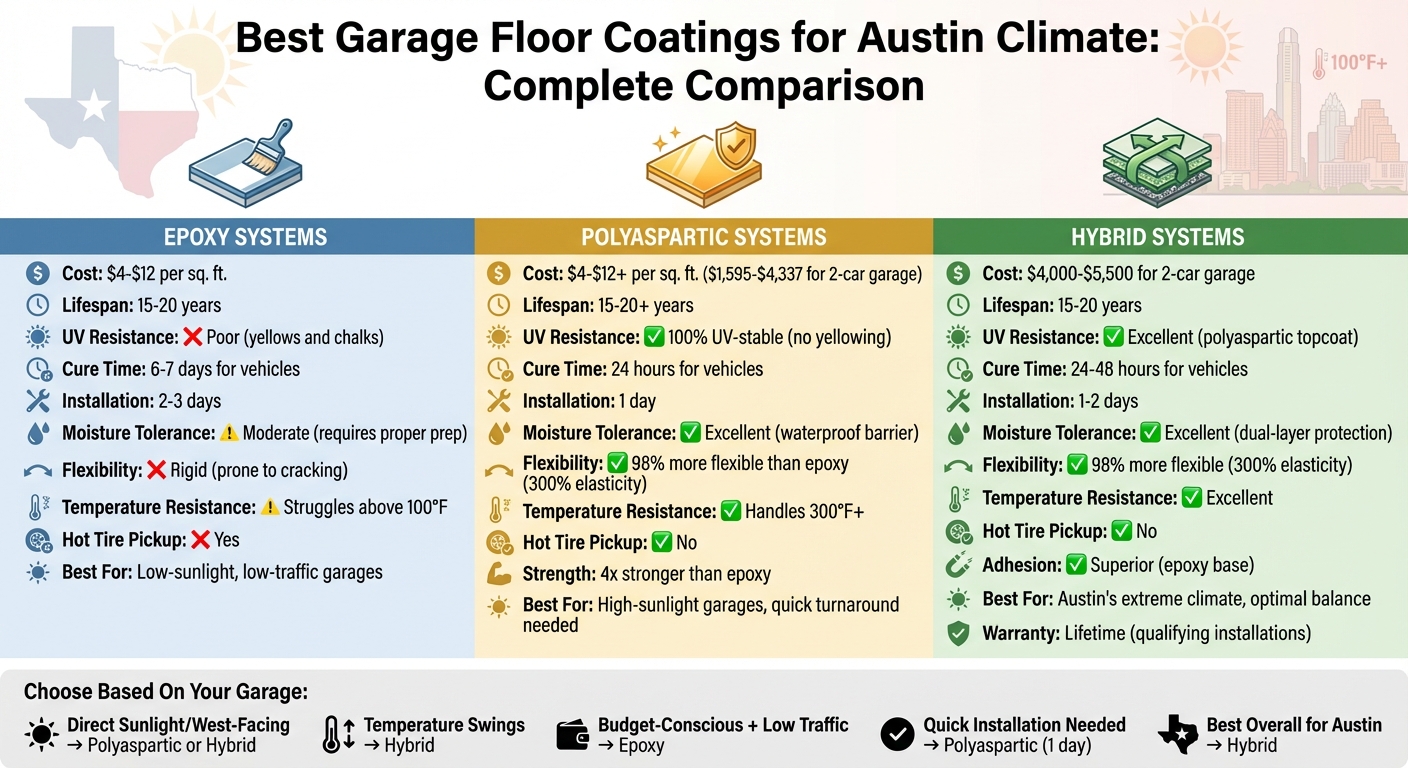
Garage Floor Coating Comparison: Epoxy vs Polyaspartic vs Hybrid Systems for Austin Climate
1. Epoxy Systems
Epoxy coatings are a go-to solution for Austin’s challenging climate, thanks to their ability to form a strong, durable bond with concrete. These two-part thermosetting resins create a nonporous barrier that shields concrete from water absorption, a key factor in preventing cracks and efflorescence. In Austin’s humid and often extreme weather, this sealing capability is essential. Professional-grade epoxy systems typically range from $4 to $12 per square foot and, with proper care, can last anywhere from 15 to 20 years. However, several factors like UV exposure, curing time, and moisture levels can impact performance.
UV Resistance
One of the main drawbacks of standard epoxy systems is their limited resistance to UV light. Prolonged exposure to direct sunlight can cause the epoxy to yellow, chalk, or fade over time. This degradation not only affects the appearance but also makes the surface more brittle. When temperatures soar above 100°F, another issue – hot tire pickup – can arise. Heated tires can soften the epoxy, leading to peeling or delamination from the concrete surface.
Cure Speed
Epoxy coatings require a bit of patience during installation. While the floor can typically handle foot traffic after 24 hours, it takes 6 to 7 days to fully cure for vehicle use. The installation process itself spans 2 to 3 days, with the resin setting in about 2 hours before the curing phase begins.
Moisture Tolerance
High humidity and moisture present unique challenges for epoxy systems. Excess moisture can interfere with the chemical reaction, causing bubbles, uneven adhesion, or even peeling. To combat this, professional installers rely on advanced preparation techniques. Moisture testing ensures the concrete slab is ready, and mechanical diamond grinding – rather than acid etching – is used to open up the concrete’s pores effectively. Without these steps, trapped moisture can lead to long-term issues like delamination.
Durability
Epoxy coatings shine when it comes to resisting stains from oil, grease, and gasoline. However, their rigidity can be a drawback, particularly in Austin’s fluctuating temperatures. As the concrete expands and contracts, the inflexible epoxy may develop scratches or chips. Heavy impacts can also cause damage. In the intense Texas heat, poorly engineered epoxy systems may start peeling over time, leaving behind an uneven and unappealing finish.
2. Polyaspartic Systems
Polyaspartic coatings are considered a top-tier solution for garage floors in Austin. Professional installation typically costs between $4 and $12+ per square foot, which means a 2-car garage might range from $1,595 to $4,337. Thanks to their quick curing times and flexibility, these coatings are well-suited to handle Austin’s intense heat and humidity.
UV Resistance
Unlike epoxy, polyaspartic coatings are built to withstand Austin’s relentless sunshine without breaking down. They are UV-stable, meaning they won’t yellow, amber, or fade even after years of direct exposure to sunlight. Another advantage? They resist hot-tire pickup – a common issue when temperatures soar past 100°F, and heated tires can pull inferior coatings off the concrete. Additionally, polyaspartic coatings are 98% more flexible than epoxy, allowing them to expand and contract with the concrete, which helps prevent cracking and peeling. Combined with their UV stability, these coatings also offer impressively fast curing times.
Cure Speed
One of the standout features of polyaspartic coatings is their rapid curing process. For example, Epoxy Flooring Group can complete an installation in just one day, with the floor ready for foot traffic in 4 to 6 hours and vehicle use in 24 hours. This quick turnaround reduces downtime and helps avoid issues caused by Austin’s unpredictable weather. However, the short pot life of polyaspartic coatings means that professional application is essential to ensure proper bonding and a smooth, even finish.
Moisture Tolerance
Austin’s subtropical humidity can be tough on garage floors, but polyaspartic coatings provide a nonporous, waterproof barrier that prevents moisture from seeping into the concrete. This protection helps avoid common issues like substrate swelling, efflorescence, and delamination. Additionally, polyaspartic coatings are highly resistant to oil, chemicals, and other garage contaminants, maintaining their integrity even in damp conditions.
Durability
Engineered to handle Austin’s fluctuating temperatures, polyaspartic systems are incredibly durable. They are four times stronger than traditional epoxy and offer 300% elasticity, making them highly resistant to impacts, abrasions, and scratches. With proper care – such as weekly sweeping and monthly mopping with a gentle cleaner – a professionally installed polyaspartic floor can last 15 to 20+ years. These coatings also adapt well to temperature swings without cracking, and many installations feature a textured vinyl flake broadcast for added slip resistance, even in wet conditions. While the upfront cost may be higher, the durability and performance make it a worthwhile investment.
3. Epoxy-Polyaspartic Hybrid Systems
Epoxy-polyaspartic hybrid systems combine the strength of a 100% solids epoxy base with the versatility of a polyaspartic topcoat. This pairing delivers exceptional adhesion to concrete, UV resistance, and quick curing – making it ideal for Austin’s challenging climate. The epoxy base ensures a strong, lasting bond with the concrete, while the polyaspartic layer protects against UV damage and accelerates the curing process. Together, they address the shortcomings of using epoxy or polyaspartic alone, creating a durable and reliable flooring option for homeowners in Austin.
UV Resistance
The polyaspartic topcoat is designed to withstand intense sunlight, maintaining its appearance without yellowing, fading, or chalking, even after prolonged exposure through open garage doors. It also prevents hot tire pickup – a common problem in high-temperature conditions – helping to preserve the finish and overall look of the floor.
Cure Speed
One of the standout benefits of hybrid systems is their fast curing time. Floors are ready for foot traffic in just a few hours and can handle vehicle use within 24 to 48 hours. This quick turnaround minimizes downtime while still delivering the deep adhesion of the epoxy base, something that standalone one-day polyaspartic systems often struggle to achieve.
Moisture Tolerance
In Austin’s humid climate, moisture can be a significant challenge for flooring systems. The epoxy base in hybrid systems creates a waterproof barrier that prevents moisture-related issues like substrate swelling, efflorescence, or delamination. On top of that, the polyaspartic layer offers additional protection against water, oil, antifreeze, and other common garage contaminants. This dual-layer defense ensures the floor stays stable and functional, even during the humid summer months.
Durability
Austin’s dramatic temperature swings require a flooring system that can handle constant expansion and contraction. Hybrid systems excel in this area, as the polyaspartic layer is 98% more flexible and offers 300% greater elasticity compared to epoxy. This flexibility allows the floor to adapt to temperature changes without cracking or peeling. Combined with the epoxy base’s strong adhesion, these systems can last 15 to 20 years with proper care. For a standard two-car garage, installation typically costs between $4,000 and $5,500 and is completed in 1–2 days by Epoxy Flooring Group, which also offers a lifetime warranty on qualifying systems.
sbb-itb-f7063d7
Pros and Cons
When it comes to choosing the right coating system, each option comes with its own set of benefits and challenges. Factors like sunlight exposure, how you use the space, and your budget all play a role in determining the best fit. Here’s a breakdown of the strengths and weaknesses of the main coating systems:
Epoxy: Known for its strong adhesion and resistance to chemicals, epoxy is a cost-effective option. However, it does have its downsides. It tends to yellow when exposed to UV rays, is susceptible to peeling caused by tires, and requires a longer curing time. Plus, the installation process demands very specific conditions for success.
Polyaspartic: This option shines with its 100% UV stability, quick curing time, and ability to handle temperatures exceeding 300°F. It also offers impressive elasticity, allowing it to adjust to temperature changes. On the flip side, polyaspartic coatings come with a higher initial cost, and their rapid curing process might limit how deeply they penetrate the concrete compared to slower-curing epoxy.
Hybrid: These systems blend the best of both worlds. They combine the excellent adhesion of epoxy with the UV protection and flexibility of polyaspartic. This makes them particularly effective on Austin’s limestone-heavy substrates. Hybrids also allow for vehicle use within 24–48 hours and are often backed by Epoxy Flooring Group’s lifetime warranty for eligible installations.
Choosing the right coating depends on the specific needs of your garage. For spaces that get a lot of sunlight or have frequent door openings, polyaspartic or hybrid systems are ideal. In more controlled environments, a well-installed epoxy system can perform well. However, be cautious with fast-curing materials that may prioritize speed over long-term durability – they might not hold up as well over time.
Conclusion
If your garage faces direct sunlight or experiences frequent door openings, choosing a UV-stable coating like polyaspartic or a hybrid system is essential. Polyaspartic coatings are ready for use within 24 hours, while epoxy systems require 3–7 days before they can handle vehicle traffic.
While installation speed is important, cost and durability also play a big role. Epoxy systems may be more budget-friendly upfront, but they can struggle with tire pickup in extreme heat. On the other hand, polyaspartic coatings, though more expensive, are up to four times stronger and can last 15–20 years with minimal upkeep.
Hybrid systems offer a smart middle ground by combining epoxy’s excellent adhesion with polyaspartic’s UV resistance and heat tolerance. This makes them ideal for handling Austin’s unpredictable temperature swings without issues like cracking or peeling.
To choose the best system, consider factors like sun exposure, foot or vehicle traffic, and how quickly you need the installation completed. For west-facing garages that endure intense afternoon sun, UV-stable topcoats are a must. Busy workshops that deal with oil spills and chemical exposure benefit from polyaspartic coatings’ superior chemical resistance. If your garage is primarily for storage with minimal traffic, a high-quality epoxy system could be a practical choice.
FAQs
Why are polyaspartic coatings a better choice than epoxy for garage floors in Austin’s climate?
Polyaspartic coatings are a smart option for Austin’s climate thanks to their strong UV resistance, which helps them hold up against the intense sunlight without yellowing or fading. They also cure much faster than epoxy, making installation quicker and more efficient. Their flexibility is another advantage, allowing them to handle the temperature swings that Austin often experiences. On top of that, polyaspartic coatings are known for their tough durability, standing up to impacts, chemicals, and moisture – features that make them ideal for both residential spaces and areas with heavy foot traffic.
How do epoxy-polyaspartic hybrid coatings improve UV resistance and durability in Austin’s climate?
Epoxy-polyaspartic hybrid coatings bring together the toughness of epoxy and the UV resistance of polyaspartic, making them a smart pick for Austin’s harsh sun and fluctuating temperatures. The polyaspartic layer acts as a shield against yellowing, peeling, and cracking from UV exposure, while the epoxy base delivers a strong and durable foundation. Together, these layers create a garage floor that can withstand Austin’s challenging climate while maintaining its appearance and integrity over time.
What should I look for in a garage floor coating that works well in Austin’s climate?
When selecting a garage floor coating for Austin’s climate, it’s essential to prioritize durability, UV resistance, and moisture protection. The city’s intense heat, high humidity, and fluctuating temperatures can lead to issues like cracking or peeling if the wrong material is applied. One standout option is polyaspartic coatings – known for their flexibility, excellent UV stability, and strong resistance to both moisture and chemicals.
To get the most out of your garage floor coating, proper surface preparation and professional installation are key. This ensures not only a long-lasting finish but also the ability to endure Austin’s tough conditions while keeping your garage floor looking flawless.