
Epoxy floor coatings are a durable, long-lasting solution for commercial spaces. They bond chemically with concrete, creating a surface that’s resistant to heavy traffic, chemicals, and moisture. With lifespans of 10–20 years, they’re ideal for high-traffic industries like warehouses, healthcare, retail, and more.
Key Benefits:
- Strength: Up to 7x stronger than bare concrete.
- Low Maintenance: Non-porous surface resists stains, bacteria, and mold.
- Customizable: Choose from over 140 colors, metallic finishes, and decorative flakes.
- Safety: Slip-resistant textures and safety markings improve workplace safety.
- UV Stability: Polyaspartic topcoats protect against yellowing in sunny climates like Austin, TX.
What Makes Epoxy Flooring Group Stand Out?
- Fast Installation: Floors are ready in 1–2 days, minimizing downtime.
- Tailored for Austin: Systems designed to handle Texas’s heat, humidity, and sunlight.
- Durable Materials: Industrial-grade epoxy with UV-stable topcoats for long-lasting performance.
- Professional Prep: Grinding and shot-blasting ensure superior adhesion and durability.
Epoxy coatings not only protect your floors but also enhance the look and functionality of your space. From seamless finishes to custom branding, they’re a smart investment for any business.
Advantages of Commercial Epoxy Coatings
Durability and Resistance in High-Traffic Areas
Commercial epoxy systems are built to handle heavy-duty use. When the resin and hardener combine, they form a tough thermoset polymer that’s up to seven times stronger than concrete. This makes it ideal for supporting heavy machinery and withstanding constant foot or vehicle traffic.
The seamless, non-porous surface of epoxy is resistant to industrial chemicals like oil, gasoline, bleach, acids, and solvents. This prevents spills from seeping into the concrete underneath, which is especially important for places like Austin warehouses, auto shops, and food processing facilities. For added durability, polyurethane topcoats can be applied to enhance impact resistance and scratch protection. Once cured, epoxy achieves a Shore D hardness rating of 80–85, making it harder than most plastics but without becoming brittle.
Additionally, professional-grade epoxy creates a waterproof barrier that discourages bacteria and mold growth. This feature makes it a hygienic choice for healthcare facilities and commercial kitchens in Austin. Industrial-grade epoxy, especially the 100% solids variety, provides a thickness of 8 to 20 mils per coat – far superior to the 2 to 4 mils typically offered by water-based options. This added thickness translates to greater resistance to wear and tear.
And while durability is a major draw, epoxy coatings also offer an array of design choices that enhance their appeal.
Design and Finish Options
Epoxy coatings aren’t just tough – they can also be visually striking. Businesses can choose from a variety of finishes, including metallic and decorative flake options, to align with their brand identity. Metallic epoxy systems, for example, use pigments to create a reflective, layered effect that mimics the look of natural stone like marble or granite. This creates a polished, high-end appearance that’s perfect for showrooms and retail spaces.
Decorative flake finishes, on the other hand, incorporate vinyl or mica flakes into the coating. This not only adds texture and color but also helps conceal imperfections while providing slip resistance. For businesses looking to personalize their floors, custom logos and brand colors can be embedded directly into the epoxy. Solid color systems with glossy finishes are another option, offering a clean and professional look that reflects light to brighten spaces. Light colors can enhance ambient lighting in areas like medical facilities and warehouses, while darker tones are better at hiding dirt in high-traffic zones.
For more specific needs, specialty textures like graveled, mortar, terrazzo, or self-leveling systems can be tailored to meet both industrial and aesthetic requirements.
These design possibilities are complemented by epoxy’s ability to perform well in Austin’s challenging climate.
Performance in Austin’s Climate
Epoxy coatings don’t just look good and last long – they’re also well-suited to Austin’s climate. With intense sunlight and high temperatures, UV stability is a key consideration. Standard epoxy can yellow over time due to UV exposure, but polyaspartic topcoats offer excellent UV resistance, making them a better choice for outdoor applications. Additionally, the heat resistance of 100% solids epoxy prevents issues like "hot-tire pickup", where heat from tires causes inferior coatings to lift off the floor.
| Feature | Standard Epoxy | Polyurethane Topcoat | Polyaspartic System |
|---|---|---|---|
| Typical Lifespan | 5–10 Years | Adds 5+ Years to Base | 10–20 Years |
| UV Resistance | Low (may yellow) | High | Excellent |
| Chemical Resistance | High | Very High | Very High |
| Best Use Case | General Warehousing | Retail & Showrooms | Outdoor Patios & Cold Storage |
Epoxy also helps regulate indoor temperatures by absorbing and retaining heat, which can improve energy efficiency in large warehouses. Its reflective surface further enhances lighting efficiency, potentially reducing energy costs for commercial facilities. Plus, modern low-VOC or VOC-free formulas promote healthier indoor air quality and can contribute to LEED credits for environmentally conscious building projects in Austin.
We Got Hired: How Professionals Install Commercial Epoxy Floors
Commercial Epoxy System Types and Applications
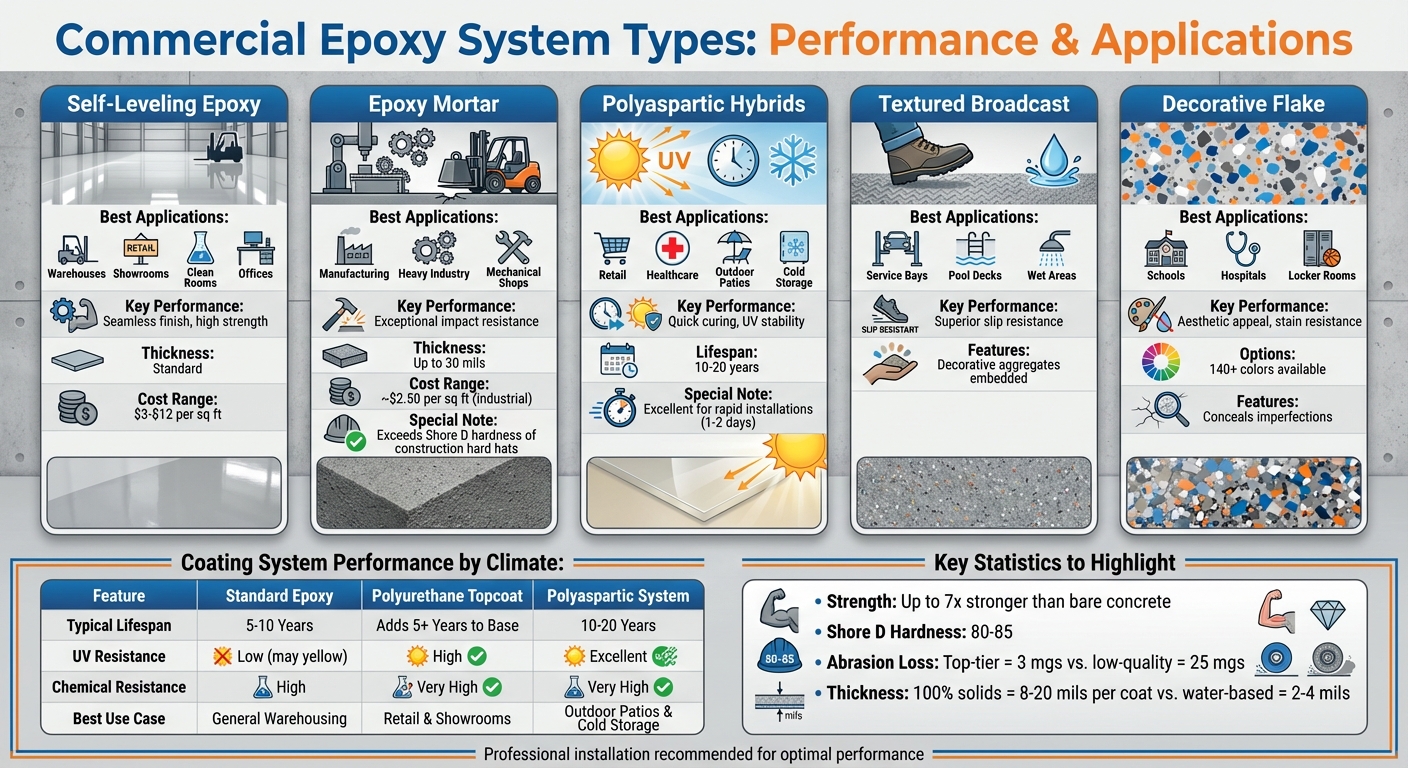
Commercial Epoxy Flooring Systems Comparison Chart
Types of Commercial Epoxy Systems
Self-leveling epoxy is a go-to solution for creating smooth, seamless surfaces. It’s perfect for spaces like warehouses, showrooms, and offices where easy cleaning and durability are key.
Epoxy mortar systems stand out as the toughest option. Made from 100% solids epoxy mixed with graded sand or quartz, these systems excel in heavy-duty environments like industrial facilities, mechanical shops, and areas with high-impact or heavy machinery. With application thicknesses reaching up to 30 mils, they handle extreme wear and tear effortlessly. Some even surpass the Shore D hardness rating of construction hard hats.
High-build broadcast systems combine functionality and aesthetics by embedding decorative aggregates in multiple epoxy layers, offering slip resistance and custom visual appeal. Polyaspartic hybrids, on the other hand, are designed for speed and versatility. They cure quickly, provide excellent UV stability, and work well for both indoor and outdoor commercial spaces.
When choosing a system, abrasion resistance is a key factor. Top-tier formulations lose as little as 3 mgs to abrasion, compared to up to 25 mgs for lower-quality options. For areas with heavy foot or vehicle traffic, adding a high-traffic urethane or polyaspartic topcoat over the epoxy base boosts durability and prevents scuffing.
These epoxy systems offer tailored solutions for a wide range of commercial needs in Austin.
Industry-Specific Applications in Austin
Austin’s industries demand epoxy systems tailored to their unique needs. For example, the city’s booming semiconductor sector, with over 23 million square feet of production space, requires high-performance flooring that can handle the precision and cleanliness of high-tech environments.
Healthcare and hospitality facilities benefit from epoxy’s seamless design, which helps prevent mold and bacteria growth while meeting strict sanitation protocols. Many of these systems also include antimicrobial additives for enhanced protection. In food and beverage processing, epoxy coatings are engineered to resist thermal shock, endure harsh cleaning chemicals, and provide slip-resistant surfaces in wet areas.
Aviation facilities near Austin rely on resinous coatings to guard against chemical spills from fuel and hydraulic fluids, all while supporting the weight of heavy aircraft. Meanwhile, warehousing and distribution centers use self-leveling epoxy to create durable, high-strength surfaces that allow for smooth equipment movement across expansive floors.
System Performance Comparison
Here’s a quick look at how different epoxy systems stack up in terms of applications and performance:
| System Type | Best Application | Key Performance Metric |
|---|---|---|
| Self-Leveling Epoxy | Warehouses, Showrooms, Clean Rooms | Seamless finish, high strength |
| Epoxy Mortar | Manufacturing, Heavy Industry | Exceptional impact resistance |
| Polyaspartic Hybrids | Retail, Healthcare, Rapid Installations | Quick curing, UV stability |
| Textured Broadcast | Service Bays, Pool Decks | Superior slip resistance |
| Decorative Flake | Schools, Hospitals, Locker Rooms | Aesthetic appeal, stain resistance |
Commercial epoxy flooring costs typically fall between $3 and $30 per square foot, depending on factors like the number of coats, system thickness, chemical composition, and design details. Heavy-duty industrial systems average around $2.50 per square foot, while decorative options vary based on customization.
sbb-itb-f7063d7
Commercial Floor Installation Process
Concrete Preparation and Assessment
Getting the concrete surface ready is a crucial step to ensure the floor lasts for years. Epoxy Flooring Group uses methods like diamond grinding and shot-blasting to achieve a Concrete Surface Profile (CSP) ranging from 2 to 8. This process removes the weak top layer of cement, known as "laitance", as well as oils, grease, and old adhesives that could prevent proper bonding.
"The number one reason for coating failure is lack of, or improper, surface preparation. Even if the resinous floor coating is installed perfectly, it won’t last long if the substrate preparation is inadequate." – Sherwin-Williams
Moisture testing is a key part of preparation. Using Calcium Chloride tests (ASTM E-1869), the team measures moisture vapor emission, which must stay at or below 3 lbs per 1,000 square feet over 24 hours. This step is especially important in Austin’s humid climate, where excess moisture can cause bubbling, peeling, and early failure. For new concrete, at least 28 days of curing is required before applying epoxy. Cracks and imperfections are repaired with specialized epoxy products to create a smooth, even surface.
Once the surface is prepped and moisture levels are under control, the installation process can move ahead efficiently.
Installation Steps
Epoxy Flooring Group typically completes commercial installations in just 1-2 days, thanks to quick-curing materials and advanced tools. The process begins with a penetrating primer that seals the concrete by bonding deep into its pores. This step prevents outgassing, which can create bubbles in the coating. The primer also forms a chemical bond with the base coat applied next.
The base coat consists of 100% solids epoxy, delivering the thickness and durability needed for heavy commercial use. Depending on the system, the application thickness can range from 10 to 250 mils. To ensure proper curing, surface temperatures should stay between 55°F and 85°F, with relative humidity below 80% for 48 hours during installation. Mixing the resin and hardener for exactly 2 minutes ensures consistency and uniform curing.
For the final layer, polyaspartic or urethane topcoats are applied. These provide UV stability, chemical resistance, and the desired gloss finish. After installation, the floor can handle foot traffic in 24 hours, while heavy equipment use requires 24 to 72 hours for a full cure.
Quality Control and Safety Protocols
Once the installation is complete, thorough quality and safety checks ensure the floor meets all performance standards.
Epoxy Flooring Group adheres to OSHA Regulation 1910.22, ensuring floors are clean, dry, and free of hazards throughout the process. Coating thickness is measured with mil gauges, and final inspections verify there are no weak spots or defects before the floor is put into use. Adhesion testing confirms the coating’s bond strength, while abrasion resistance testing ensures the floor can handle heavy machinery and forklift traffic, following ASTM D4060 standards.
Installers wear spiked shoes and full PPE, including latex gloves and safety goggles, to maintain quality and safety. High-powered vacuums integrated with grinding equipment keep the environment dust-free, preventing concrete dust from entering HVAC systems. For areas requiring slip resistance, anti-slip aggregates like aluminum oxide or quartz are added, meeting ASTM C1028 traction standards. Low-VOC materials are used to maintain air quality and meet environmental regulations. In food and beverage facilities, the team installs seamless, non-porous surfaces that prevent bacterial growth and comply with FDA/USDA standards.
Maintenance and Long-Term Costs
Daily and Periodic Maintenance
Taking care of your commercial epoxy floor is simpler than you might think. A quick sweep or dust mop each day clears away grit, while a damp mop at the end of the day keeps high-traffic areas clean.
Once a week, go for a deeper clean using a pH-neutral cleaner mixed with warm water and a floor scrubber fitted with soft nylon brushes. The steps are straightforward: sweep the floor, apply the cleaning solution, let it sit for 5–10 minutes to loosen grime, scrub with the machine, and then remove the dirty water using a wet vacuum or scrubber. This approach is far more effective than traditional mopping, which can leave behind residue and takes longer to dry.
"A floor scrubber or cleaning machine is an investment, but in the long run it will save you time and money." – Stonhard
Stay away from soap-based cleaners, vinegar, citrus products, bleach, or undiluted ammonia, as these can damage the glossy topcoat and leave a dull, slippery residue. Avoid waxing as well – removing wax often requires aggressive scrubbing that can harm the epoxy finish. For chemical spills, clean them up immediately to prevent staining or surface damage.
Regular upkeep not only keeps your floor looking great but also helps you spot when it’s time for a recoat.
When to Recoat Your Floor
Even the toughest epoxy floors will show wear over time, especially in high-traffic areas. Signs like peeling, bubbling, or heavy wear mean the coating is starting to fail. Cuts, gouges, or a persistent dull look are also red flags.
"The key to these problems is not to ignore them but to treat them as soon as they are noticed." – Liquid Floors
Epoxy Flooring Group offers light-prep recoating services that bring your floor back to life without needing a full replacement. Premium systems like JetRock can last up to 15 years with proper care, but most commercial epoxy floors benefit from professional recoating every 10 to 20 years, depending on how much traffic they handle. The recoating process usually takes just 1–2 days, so it won’t disrupt your business for long.
By recoating at the right time, you can keep your floor in top shape while avoiding major repair costs down the line.
Total Cost of Ownership Analysis
When planning your flooring investment, it’s important to think beyond the upfront cost. Professional epoxy flooring typically costs between $8 and $12 per square foot. With a lifespan of 10 to 20 years and minimal maintenance, it offers excellent long-term value.
Routine maintenance and timely recoating ensure you get the most out of your investment, keeping ownership costs low over time.
| Flooring Type | Initial Cost (per Sq. Ft.) | Lifespan | Maintenance Level | Total 10-Year Cost (Est.) |
|---|---|---|---|---|
| Professional Epoxy | $8 – $12 | 10+ Years | Low | $8 – $12 |
| Vinyl Flooring | $4 – $8 | 5–7 Years | Moderate | $8 – $16 |
| Carpet | $3 – $8 | 3–5 Years | High | $9 – $24 |
| Ceramic Tile | $10 – $20 | 15+ Years | Moderate | $12 – $25 |
Epoxy’s seamless, non-porous surface eliminates the need for waxing, grout replacement, or specialized cleaners. For instance, in commercial kitchens, quarry tile often requires costly grout repairs within a year, but epoxy avoids this recurring issue. Its reflective surface can also improve lighting efficiency, reducing electricity costs in spaces like warehouses and retail stores. Plus, its resistance to "hot tire pickup" in extreme heat – where standard floor paints soften and peel – saves you from expensive repairs and downtime, especially in Texas summers.
Why Choose Epoxy Flooring Group in Austin, TX
When it’s time to upgrade your commercial floors, finding the right installer is key. Epoxy Flooring Group has earned its reputation as Austin’s go-to epoxy flooring expert by combining cutting-edge preparation methods with top-tier materials designed to handle Texas’s unique challenges. This dedication to quality is at the heart of everything we do.
We take surface preparation seriously. By using a dual-prep method that combines diamond grinding with acid etching, we ensure the epoxy adheres perfectly to the surface. This process prevents the peeling that often happens with subpar installations [70,1]. Plus, our 100% solids epoxy systems are built to withstand oils, chemicals, and the dreaded "hot tire pickup" caused by Austin’s scorching summer temperatures [70,69]. The result? A floor with unparalleled bonding strength, thanks to our meticulous preparation.
Our efficient 1–2 day installation process keeps downtime to a minimum, and we back our work with a lifetime warranty against peeling and chipping – giving you peace of mind that your investment is protected. With over 140 color options, metallic finishes, and even the ability to embed your company logo into the floor, customization options are nearly endless.
From warehouses and retail spaces to healthcare facilities and industrial plants, we create flooring systems tailored to Austin’s unique climate – think high temperatures, humidity, and even dust storms. Our polyaspartic topcoats add an extra layer of protection, offering exceptional UV resistance to keep your floors from yellowing or fading, even in areas exposed to direct sunlight.
Ready to see the difference for yourself? Contact us today for a free onsite estimate and find out why so many Austin businesses rely on us for flooring that’s not just durable, but also visually striking year after year.
FAQs
How do epoxy floor coatings hold up in busy commercial spaces?
Epoxy floor coatings are built to last, making them a great choice for busy commercial spaces. They can handle heavy foot traffic, machinery, and even vehicles without showing signs of wear. On top of that, they offer strong resistance to chemicals, stains, and abrasions, which is why they’re a popular pick for places like warehouses, retail stores, and healthcare facilities.
When installed correctly, epoxy floors require very little upkeep while keeping their sleek appearance. They’re tough enough to perform well under demanding conditions and provide a seamless finish that’s both practical and visually appealing. For any commercial space looking for a dependable flooring option, epoxy is a solid choice.
What design and style options are available for epoxy flooring?
Epoxy flooring provides an impressive array of design possibilities to complement any space or style. Whether you’re drawn to solid colors, metallic finishes, or decorative flakes and chips for added texture, there’s something to fit your vision. Want something more distinctive? You can incorporate quartz aggregates or craft custom patterns that align with your personal taste or even reflect your brand identity. This flexibility makes epoxy flooring a practical and stylish solution for both homes and businesses.
How does your epoxy floor installation process reduce downtime for businesses?
Our epoxy floor installation process is tailored to keep your business running smoothly with minimal downtime. Thanks to advanced, quick-curing epoxy and polyaspartic formulations, we can drastically reduce both application and curing times. In most cases, floors are ready for light foot traffic in just 6 to 12 hours, while full curing is typically achieved within 3 to 7 days, depending on the specific conditions.
This streamlined approach means you can get back to business faster, all while enjoying durable, high-performance flooring designed to handle the challenges of high-traffic areas.