
When deciding between concrete sealing and epoxy coating, it’s all about your specific needs and how the space will be used. Here’s the quick breakdown:
- Concrete Sealing is affordable, protects against moisture and wear, and maintains the natural look of concrete. It’s ideal for outdoor areas like driveways, patios, and sidewalks but requires frequent reapplication (every 2–5 years).
- Epoxy Coating offers a durable, glossy finish with superior protection against heavy traffic, impacts, and chemicals. It’s more expensive upfront but lasts 10–20 years with minimal maintenance, making it perfect for garages, commercial spaces, and high-traffic areas.
Quick Comparison
| Feature | Concrete Sealer | Epoxy Coating |
|---|---|---|
| Durability | Moderate; reapply every 2–5 years | High; lasts 10–20 years |
| Cost | $0.40–$2.00 per sq. ft. | $3.00–$12.00 per sq. ft. |
| Appearance | Natural look, limited options | Glossy, customizable designs |
| Best Use | Outdoor areas, light-duty spaces | Garages, commercial, heavy-duty |
If you want low-cost protection for outdoor areas, sealing works. For long-lasting durability and a polished finish, epoxy is the clear winner.
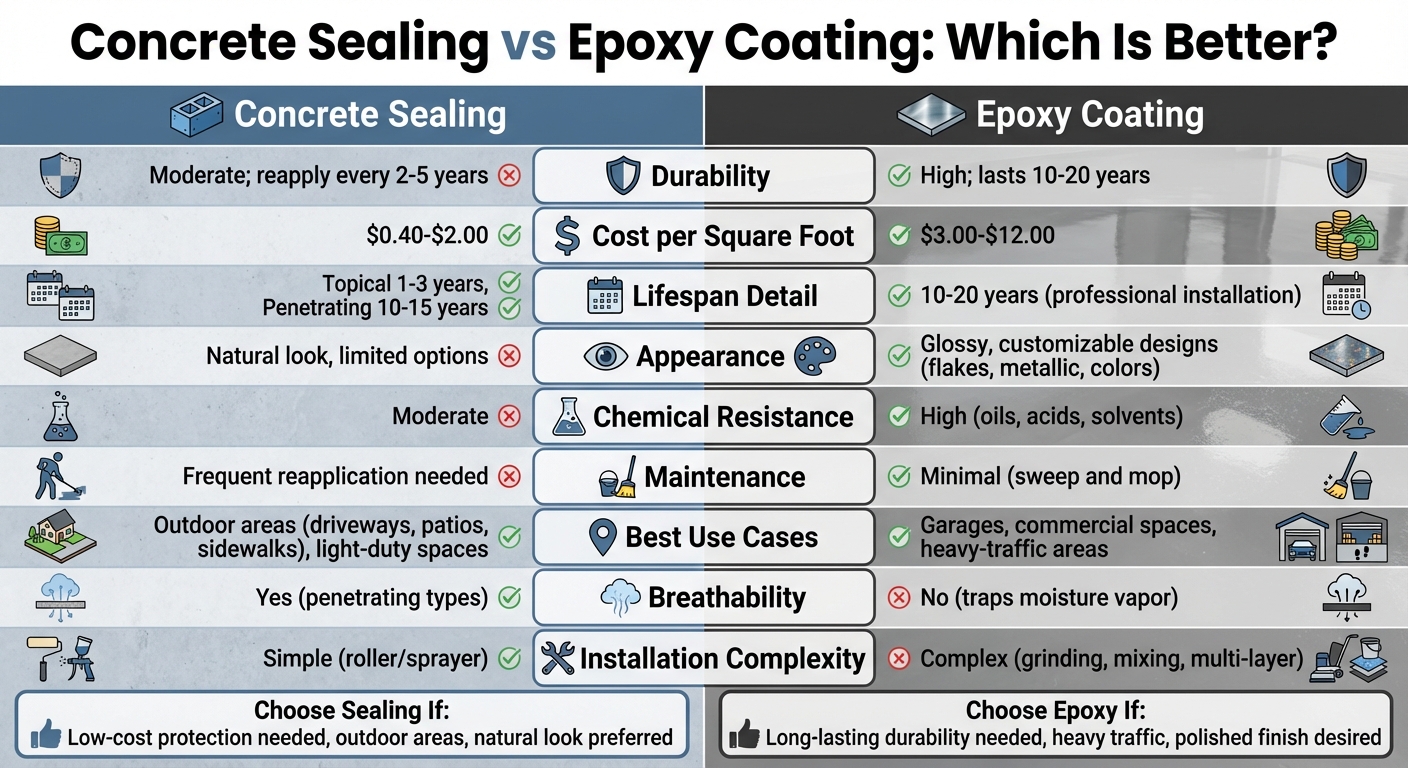
Concrete Sealing vs Epoxy Coating: Complete Comparison Guide
Sealers vs Coatings for Garage Floors and Workshops – Which is Best for You?
What Is Concrete Sealing?
Concrete sealing is a treatment designed to shield concrete surfaces from moisture, chemicals, and physical wear and tear. By filling the tiny pores in untreated concrete, it prevents liquids and contaminants from seeping in and weakening the structure.
This protection tackles two key issues. Moisture protection helps block water intrusion, which can cause freeze-thaw damage – a process where trapped water expands as it freezes, leading to cracks. On the other hand, wear protection minimizes the effects of foot and vehicle traffic, reduces surface flaking, and guards against UV damage that can degrade concrete over time. In areas like Austin, sealing also helps by limiting moisture absorption into the clay-heavy soils beneath the concrete, reducing foundation movement and slab instability.
How Concrete Sealing Works
Concrete sealers are generally divided into two categories based on their method of protection: penetrating sealers and topical sealers.
- Penetrating sealers are absorbed deep into the concrete, forming an invisible, water-repelling barrier inside the material. Unlike surface coatings, they allow the concrete to "breathe" while maintaining its natural texture and traction. These are ideal for outdoor surfaces like driveways, sidewalks, and pool decks.
- Topical sealers, by contrast, create a protective layer on the surface. This layer can have a glossy or matte finish, enhancing the concrete’s appearance while offering a sacrificial shield against stains.
For high-traffic areas, resealing is recommended every 2–5 years. New concrete, however, needs at least 28 days to cure before it can be sealed. Wondering how to check if your sealer is still effective? Splash some water on the surface – if it beads up, the sealer is doing its job. If the water soaks in and darkens the concrete, it’s time for a reseal.
Where Concrete Sealing Is Used
Concrete sealing is commonly applied to residential driveways, patios, sidewalks, pool decks, and countertops. In commercial spaces, it’s used for building facades, parking garages, bridge decks, and public walkways. Both horizontal surfaces (like floors and pavements) and vertical ones (such as walls and columns) benefit from sealing, especially in areas that require moisture protection and light wear resistance.
The cost of sealing varies. Professional sealing typically runs between $1.00 and $2.00 per square foot, while DIY options are more affordable, ranging from $0.10 to $0.75 per square foot. High-quality sealers for professional use cost between $30 and $50 per gallon, with one gallon covering roughly 200 square feet. For homeowners in Austin, sealing is an economical way to protect outdoor concrete from moisture and UV exposure. However, it’s not the best option for garage floors or commercial spaces that demand heavy-duty durability. Up next, we’ll explore epoxy coatings, which provide enhanced strength and visual appeal for more demanding applications.
What Is Epoxy Coating?
Epoxy coating is a two-part flooring system created by combining an epoxide resin (Part A) with a polyamine hardener (Part B). When these components are mixed, they trigger a chemical reaction that transforms the liquid blend into a tough, high-strength plastic that adheres directly to concrete surfaces. Unlike penetrating sealers that absorb into the concrete or topical sealers that sit on the surface, epoxy forms a thick, seamless protective layer – usually between 10 and 250 mils thick. This coating creates a non-porous, waterproof barrier that resists oils, fuels, solvents, acids, and harsh cleaning agents. Its strong adhesion and protective qualities make it much more durable than standard surface sealers.
A professional epoxy installation typically includes three layers: a primer coat that seals the concrete and prevents bubbling, a base coat for thickness and color, and a UV-resistant topcoat for added durability. This process is designed to withstand heavy foot and vehicle traffic, impacts, and abrasions, making it ideal for busy environments like Austin garages. These garages often face challenges like daily use, hot tire pickup, oil drips, and temperature changes. The multi-layer system not only ensures durability but also delivers a range of standout features.
Key Features of Epoxy Coating
Durability: Professionally installed epoxy floors can last 10 to 20 years with proper care, and in residential settings, they may even exceed 20 years. This longevity stands out compared to traditional sealers, which often need reapplication every few years.
Customization: Epoxy offers a variety of design choices, including solid colors, metallic pigments, decorative vinyl flakes, and high-gloss finishes that enhance light reflectivity. These options allow homeowners to create a polished, sophisticated look that elevates the appearance of any garage.
Safety: While epoxy naturally provides a smooth surface, slip-resistant additives like quartz grains, silica sand, or aluminum oxide can be added to the topcoat to improve traction. This is especially helpful in wet conditions, such as during rain or when vehicles are being washed.
Ease of Maintenance: Its seamless, non-porous surface is easy to clean with pH-neutral solutions, and tougher stains can be tackled with ammonia and hot water.
Where Epoxy Coating Is Used
Epoxy coating’s durability and aesthetic flexibility make it suitable for a variety of spaces.
Residential Garages: In Austin, epoxy is particularly popular for residential garages. It protects against hot tire pickup, oil stains, and daily wear from parked vehicles. Additionally, it seals the concrete to prevent moisture issues and withstands temperature changes.
Commercial and Industrial Facilities: Industrial warehouses and commercial spaces benefit from epoxy’s ability to handle heavy equipment, forklift traffic, and exposure to chemicals. Its easy-to-clean and sanitary surface makes it a practical choice for these environments.
Decorative Flooring: Epoxy is also gaining popularity for decorative purposes in homes and businesses. It works well in areas like basements, retail spaces, office lobbies, and hospital corridors, where both style and cleanliness are essential. The high-gloss finish can brighten spaces and may even help reduce lighting costs.
Professional epoxy installation costs typically range from $3.00 to $30.00 per square foot. While the upfront cost may be higher than concrete sealing, epoxy’s durability and reduced need for reapplication make it a cost-effective option in the long run.
sbb-itb-f7063d7
Concrete Sealing vs Epoxy Coating: Direct Comparison
Let’s dive into a side-by-side look at how concrete sealers and epoxy coatings stack up against each other.
Durability and Protection
Concrete sealers and epoxy coatings work differently to protect floors. Sealers penetrate into the concrete, strengthening it from within, while epoxy forms a tough, protective layer on the surface. This difference is crucial for places like Austin garages, where floors endure daily wear from vehicles, oil drips, and fluctuating temperatures.
Epoxy stands out for its durability, handling heavy impacts, abrasions, and vehicle traffic better than most sealers. It also provides excellent resistance to chemicals, oils, and automotive fluids – levels of protection that sealers often can’t achieve. Professionally installed epoxy can last 10 to 20 years, while topical acrylic sealers may need reapplication every 1 to 3 years in high-traffic areas. Penetrating sealers, on the other hand, typically offer protection for 10 to 15+ years.
One thing to note: penetrating sealers allow moisture vapor to escape, while epoxy coatings do not. This non-breathable nature can lead to issues like bubbling or peeling if moisture builds up beneath the surface. For areas prone to moisture, applying a deep-penetrating sealer before installing epoxy can help prevent these problems and extend the coating’s lifespan.
Appearance and Customization
Concrete sealers enhance the natural look of concrete, offering finishes like high-gloss "wet look", satin, or matte. Penetrating sealers are nearly invisible, preserving the original texture and color of the slab.
Epoxy coatings, however, completely transform the surface with a glossy, polished finish that hides imperfections and discolorations. They also offer far more design options. From decorative flakes and metallic pigments that mimic marble to quartz aggregates and a wide range of colors, epoxy provides endless customization possibilities. Sealers, by comparison, are limited to a few tints and gloss levels.
That said, standard epoxy coatings can yellow or fade under prolonged UV exposure. To avoid this, a UV-resistant topcoat or polyaspartic system is recommended. In industrial settings, well-maintained epoxy flooring can retain its sleek appearance for up to 10 years, while sealers may need periodic touch-ups to stay looking fresh.
Cost and Long-Term Value
Concrete sealers are more budget-friendly upfront, with material costs ranging from $0.15 to $1.00 per square foot. Epoxy coatings, on the other hand, require a larger initial investment, typically costing $3.00 to $7.00 per square foot for professional installation.
However, epoxy offers better long-term value. A single professional application can last 15 to 20 years or more with proper care, whereas basic sealers or garage paints might need reapplication every 1 to 3 years. For Austin garages, which deal with heat and heavy traffic, epoxy’s durability becomes even more appealing. It resists common issues like "hot tire pickup", where tires can peel off weaker coatings in high temperatures. Plus, its non-porous surface requires minimal maintenance – usually just sweeping or mopping – making it a cost-effective choice over time.
Comparison Table: Concrete Sealing vs Epoxy Coating
Here’s a quick breakdown of the key differences:
| Feature | Concrete Sealer | Epoxy Coating |
|---|---|---|
| Durability | Moderate; protects against moisture/stains | High; resists heavy impacts and wear |
| Chemical Resistance | Moderate (urethane performs best) | High; resists oils, acids, and solvents |
| Breathability | Yes (penetrating types) | No; traps moisture vapor |
| Lifespan | 1–3 years (topical); 10–15 years (penetrating) | 10–20 years (professional installation) |
| Appearance | Natural look; "wet look" or tinted | Glossy, showroom-style finish |
| Customization | Limited (tints, gloss levels) | Extensive (flakes, metallic, quartz, etc.) |
| Maintenance | Frequent reapplication | Minimal; sweeping and mopping |
| Installation | Simple; roller or sprayer application | Complex; requires grinding and mixing |
| Cost | $0.15–$1.00 per sq ft (materials) | $3.00–$7.00 per sq ft (installed) |
| Best Use | Light-duty areas, natural aesthetic | High-traffic garages, commercial spaces |
This comparison highlights the strengths and trade-offs of each option, helping you decide which is better suited to your needs.
Best Applications for Austin Properties
When deciding between concrete sealing and epoxy coating, the choice often comes down to how the space will be used and the level of wear and tear it will endure. Austin’s scorching summers, high humidity, and fluctuating temperatures also play a significant role in determining the best option. Here’s a closer look at where each solution shines.
Residential Applications
For garages in Austin homes, epoxy coating is the go-to solution. It stands up to vehicle traffic, oil spills, and tool impacts, while also resisting the extreme heat that can lead to hot-tire pickup with lesser coatings. Additionally, its shock-absorbing properties and easy-to-clean surface make it a practical choice for dual-purpose spaces like home gyms or workshops.
Inside the home, epoxy works wonders in living areas, delivering a high-gloss finish with customizable flake blends that can mask imperfections in older concrete floors. Its seamless, nonporous surface makes cleaning a breeze – just soap and water will do the trick.
On the other hand, concrete sealing is ideal for outdoor areas like driveways, patios, and walkways. Penetrating sealers are particularly effective for these spaces because they allow moisture vapor to escape, which is crucial given Austin’s humid climate. Unlike standard epoxy, sealers are better at handling UV exposure, avoiding the yellowing that can occur under direct sunlight. For low-traffic areas, sealers provide a cost-effective way to protect concrete while preserving its natural appearance.
Commercial and Industrial Applications
In Austin’s commercial and industrial settings, flooring often requires even greater durability. Epoxy coatings are a staple in warehouses, manufacturing facilities, and automotive shops, thanks to their ability to withstand heavy-duty use that would quickly degrade simple sealers. Epoxy’s nonporous surface is resistant to oils, solvents, acids, and harsh cleaning agents, making it indispensable in mechanic shops and manufacturing plants.
For food processing facilities and commercial kitchens, seamless epoxy or urethane cement coatings are excellent choices. They not only meet strict cleaning standards but also help prevent bacterial growth. Retail spaces benefit from epoxy’s ability to incorporate anti-slip additives, ensuring safety in high-traffic areas.
When time is of the essence, polyaspartic coatings offer a quicker turnaround, curing in just 4 to 8 hours compared to the 24 to 72 hours required for traditional epoxy. This speed is especially valuable for businesses that can’t afford extended downtime.
For outdoor commercial spaces like loading docks or patios, UV-stable polyaspartic coatings are a smart option. They help prevent the yellowing effect often seen in Texas’s sunny conditions.
Why Epoxy Coating Is the Better Choice for Austin
Austin’s unique climate creates challenges that basic concrete sealing simply can’t handle. With its scorching summers, high humidity, and clay-heavy soil, the city presents conditions that lead to moisture intrusion and hydrostatic pressure – both of which can wreak havoc on unprotected concrete floors. Concrete, being naturally porous, absorbs moisture easily, leading to musty odors, mold growth, and even efflorescence. Epoxy, however, forms a seamless, non-porous barrier that prevents water vapor from seeping through, keeping dampness, mold, and other moisture-related issues at bay.
When it comes to durability, epoxy outshines standard paint or sealers by a wide margin. While traditional coatings might last only 1–3 years, professionally installed epoxy floors can endure for 15–20 years. Epoxy also resists "hot tire pickup", a common problem in Texas heat, which weaker coatings often fail to withstand. Plus, high-quality epoxy systems are designed to flex with temperature changes, ensuring they don’t crack or delaminate as the seasons shift.
Epoxy Flooring Group takes these benefits a step further with solutions tailored for Austin’s climate. Their process includes mechanical diamond grinding to create a strong bond that stands up to hot tire stress and soil movement. They apply industrial-grade, 100% solids epoxy at a thickness of 8 to 20 mils – far superior to the 2 to 4 mils offered by typical water-based sealers. This thicker, more durable layer can handle heavy vehicle traffic, dropped tools, and chemical spills with ease.
From a financial perspective, epoxy flooring is a smart investment. Costing between $3 and $12 per square foot, it offers a return on investment of 60% to 80%. Some real estate experts even suggest that epoxy floors can boost a home’s perceived value by $5,000 to $10,000. With minimal maintenance and the option to refresh the topcoat over time, epoxy delivers exceptional long-term value for Austin homeowners.
FAQs
How does the durability of concrete sealing compare to epoxy coating?
Epoxy coatings stand out for their durability, offering exceptional impact resistance, chemical protection, and the strength to endure heavy traffic. These qualities make them a go-to option for spaces like residential garages, commercial areas, and industrial facilities where tough, long-lasting flooring is essential.
On the other hand, concrete sealing does a good job of guarding against moisture and stains but falls short in terms of strength and longevity compared to epoxy. Especially for homeowners in Austin, where shifting temperatures and humidity can take a toll on floors, epoxy coatings provide a more dependable and enduring solution.
Which is more cost-effective over time: epoxy coating or concrete sealing?
While epoxy coatings might come with a higher initial price tag, they stand out for their long-lasting durability and minimal upkeep needs, making them a smart investment over time. In contrast, concrete sealing is usually cheaper upfront but requires regular reapplications, which can become costly in the long run.
For Austin homeowners, epoxy coatings are particularly advantageous. They’re designed to handle the area’s shifting temperatures and high humidity, providing a flooring solution that’s both tough and dependable for years to come.
What’s the best flooring option for areas with high moisture levels?
Epoxy coating stands out as a smart option for spaces exposed to high levels of moisture. Its waterproof surface and durability form a seamless layer that shields against water damage. This makes it particularly well-suited for Austin’s humid climate or areas like basements and garages that often deal with damp conditions.
Another big plus? Epoxy floors are incredibly easy to maintain. They require minimal effort to keep clean, even in tough environments. For Austin homeowners, epoxy coatings offer a practical solution that holds up over time in moisture-heavy spaces.